LONGEVITY

Health is measured in years, not just test results.
Health testing gives important information at one point in a dog's life, but understanding health also means following dogs as they age. Later-onset conditions, combined with information from parents, grandparents, siblings, and the wider family, provide valuable evidence for future breeding decisions.

WE SHOULD NOT STOP COLLECTING HEALTH INFORMATION ONCE A DOG HAS BEEN BRED FROM.

LONGEVITY & GENETIC DIVERSITY
Longevity should never be considered in isolation. No individual dog or bloodline is perfect, and responsible breeding is about balancing available evidence rather than automatically removing every dog from breeding because of one imperfect feature. Over-removing dogs and bloodlines from the breeding population can significantly reduce genetic diversity, which may create different health problems for future generations.
LONGEVITY
GENETIC DIVERSITY
BREED TYPE
TEMPERAMENT
FAMILY HISTORY
FUNCTIONAL ABILITY
REPRODUCTIVE HEALTH
HEALTH TESTING
OVERALL QUALITY OF LIFE
HEALTH TESTING + FAMILY HISTORY + LONGEVITY + FUNCTION = A MUCH BIGGER PICTURE.
WHAT SHOULD WE RECORD?
Useful longevity information is collected throughout a dog's life, not simply at the end of it. Recording changes as a dog ages can help build a much clearer picture of health across families and generations.
- Date of birth
- Current age
- Health test results
- Significant diagnoses
- Age when conditions first appeared
- Mobility in later life
- Respiratory function
- Temperament and behavioural changes
- Reproductive health
- Ability to exercise and function
- Age at death
- Cause of death where known
- Relevant veterinary documentation where available
Not every owner will have every piece of information. Partial information is still valuable when it is clearly labelled and its source is understood.
OWNER REPORTED
Information provided by the owner.
DOCUMENTED
Information supported by records or documentation.
VETERINARY VERIFIED
Information supported by appropriate veterinary evidence.
Bullbreeds United distinguishes between these evidence sources where appropriate rather than presenting every piece of submitted information as veterinary evidence.
CAUSE OF DEATH MATTERS
Age at death alone does not tell the whole story. A dog that lived to 11 years and died following an accident tells a very different health story from a dog that reached 11 after developing serious chronic disease at six.
Both dogs reached the same age, but their healthspan and lifetime health information are very different. Recording cause of death where it is known can provide valuable context when looking at individuals, families and generations.
The purpose is not to assign blame, but to preserve information that may help us understand patterns in the future.
CAUSE OF DEATH PROVIDES ESSENTIAL CONTEXT, NOT BLAME.
DON'T DELETE THE OLD DOGS FROM THE STORY.
A dog's value as information does not end when it finishes breeding, retires from showing or dies. In fact, older and deceased dogs may provide some of the most valuable information within a pedigree because we can see more of their lifetime health outcome.
Keeping these dogs visible allows future generations to benefit from information about how long they lived, how well they aged, conditions that developed later in life and, where known, what ultimately caused their death. A pedigree should preserve the whole story — not only the dogs currently being bred from.
DOG A
12 years 4 months
Active into later life
DOG B
10 years 8 months
Cause of death recorded
DOG C
13 years
Longevity recognised
Illustrative examples only – not real BBU dogs.
BBU LONGEVITY RECOGNITION
CELEBRATING THE OLDIES
Bullbreeds United believes longevity should be visible, recorded and celebrated. Too often, attention is focused on young dogs, current show winners and breeding animals, while the dogs that reach later life quietly disappear from the breed's recorded history.
The BBU Registry is designed so that a dog's record can continue to grow throughout its lifetime rather than becoming a static record created when the dog is young. As dogs age, longevity information, veteran achievements and relevant lifetime health information can become part of their permanent record.
Recognising older dogs is not simply about celebrating a number. It helps preserve valuable information about what breeding decisions produced over an entire lifetime.
Real BBU Longevity badge artwork to be added here.

OLD DOGS ARE NOT YESTERDAY'S DATA. THEY ARE EVIDENCE FOR TOMORROW.
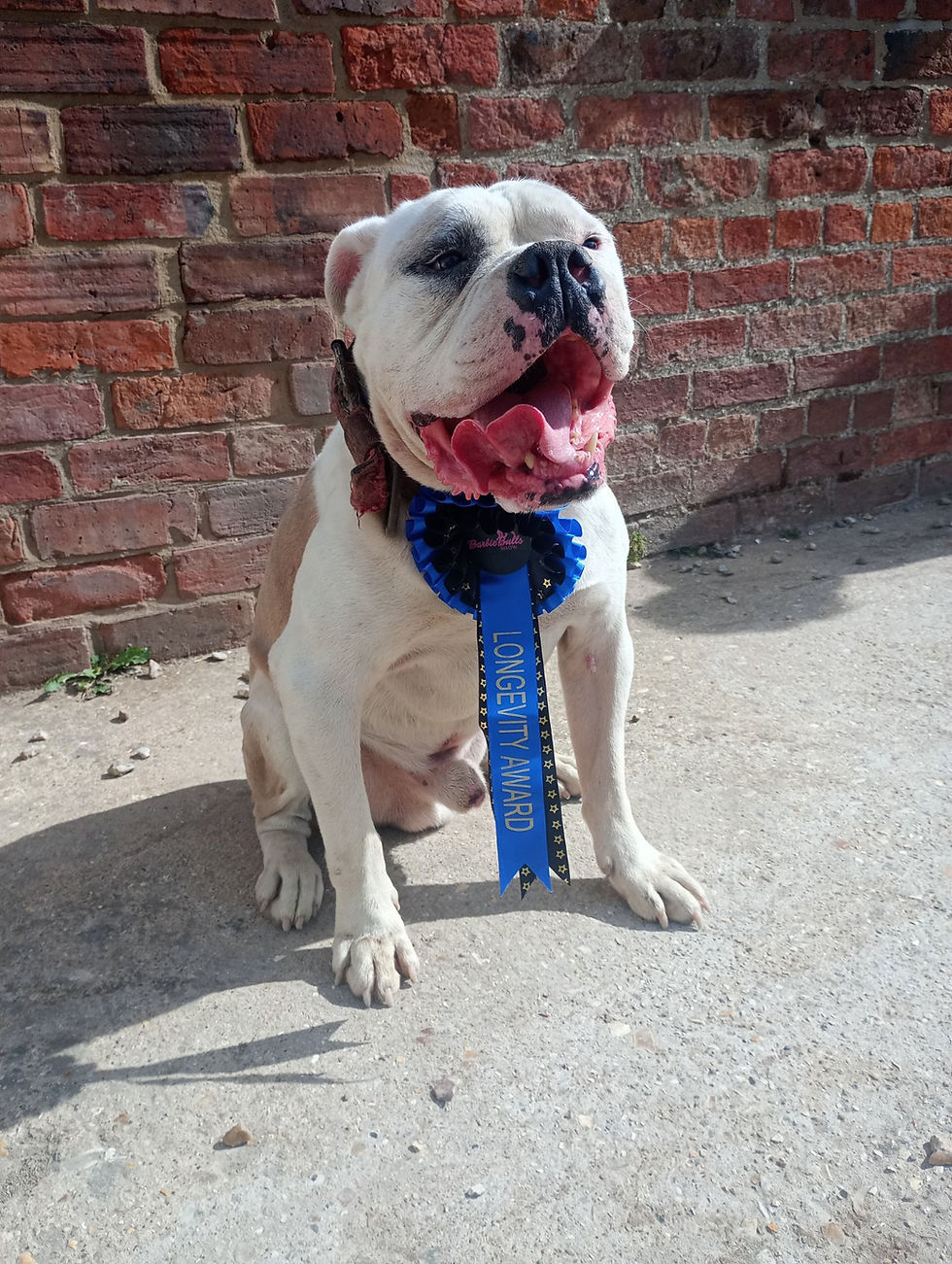
LONGEVITY AWARDS AT BARBIEBULLS SHOWS
BARBIEBULLS shows have long believed that older dogs deserve to be seen, celebrated and recognised. Veteran dogs represent something particularly valuable. They allow us to see the result of breeding decisions many years later — not simply how a dog looked or performed when it was young. Longevity recognition and veteran classes give older dogs their place back in the ring while helping encourage owners and breeders to keep sharing information as their dogs age. Where appropriate, longevity and veteran achievements can also become part of a dog's historical BBU Registry record, preserving those achievements for the future.
THE OLDIES STILL DESERVE THEIR MOMENT IN THE RING.
