EYE HEALTH

KNOW • CHECK • CARE • PROTECT
Healthy eyes should be clear, comfortable and functional.
Eye health is about much more than appearance. Redness, discharge, excessive tearing, squinting, cloudiness or changes to the eyelids can indicate discomfort or disease and should never simply be accepted as “normal for the breed”.
EARLY DETECTION MAKES A DIFFERENCE.
WHAT SHOULD A HEALTHY EYE LOOK LIKE?
- • Clear and bright
• Comfortable and relaxed
• No persistent redness
• No excessive discharge or tearing
• Eyelids sitting correctly against the eye
• No obvious cloudiness
• No constant squinting or rubbing
Healthy eyes can vary in appearance between individual dogs. Excessive visible white or changes in eye position should be considered alongside overall eye conformation and comfort, rather than judged in isolation.

COMMON EYE CONDITIONS IN BULLBREEDS




CHERRY EYE
PROLAPSE OF THE THIRD EYELID GLAND
Cherry eye is the common name for prolapse of the gland of the third eyelid.
Dogs have a third eyelid, also called the nictitating membrane, located at the inner corner of the eye. Associated with it is an important tear-producing gland.
When the tissues that normally hold this gland in position weaken or fail to support it properly, the gland can prolapse and become visible as a pink or red rounded swelling in the inner corner of the eye.
“CHERRY EYE IS NOT JUST A RED LUMP — THIS GLAND PLAYS AN IMPORTANT ROLE IN TEAR PRODUCTION.”
WHY DOES IT HAPPEN?
Cherry eye is seen particularly in young dogs and is more common in some breeds, including several bullbreeds and brachycephalic breeds. There can be an inherited or breed-related predisposition because of the structure and supporting tissues around the third eyelid gland. It may affect one eye first and later appear in the other eye.

WHAT SHOULD OWNERS LOOK FOR?
- • Pink or red rounded tissue at the inner corner of the eye
• Swelling that may appear suddenly
• Excessive tearing or discharge
• Rubbing or pawing at the eye
• Irritation or redness
• A prolapse that initially appears and disappears before becoming persistent
“IF IT POPS BACK IN, THAT DOES NOT NECESSARILY MEAN IT IS GONE FOR GOOD.”
Cherry eye itself may look dramatic, but the long-term aim is to protect the eye, preserve healthy tear production and keep the dog comfortable.
CHERRY EYE — WHAT ARE THE OPTIONS?
There is not one identical treatment plan for every case of cherry eye.
The dog's age, how long the gland has been prolapsed, the condition of the tissue, whether it repeatedly pops in and out, and the health of the eye all matter.
The important thing is understanding that the third eyelid gland contributes to normal tear production, so preserving a healthy gland wherever possible is generally preferred.
“THE AIM IS NOT JUST TO MAKE THE LUMP DISAPPEAR — IT IS TO PROTECT THE FUNCTION OF THE EYE.”
STAGE 1:
VERY EARLY CHERRY EYE

When a cherry eye has only just appeared, particularly in a young dog, gentle massage may sometimes allow the prolapsed gland to return temporarily to its normal position.
This should never involve force or repeatedly irritating the eye.
Even when the gland goes back into position, it may prolapse again because massage does not correct the underlying weakness that allowed it to prolapse.
“BACK IN DOES NOT ALWAYS MEAN FIXED.”
STAGE 2:
GLAND-PRESERVING SURGERY

When cherry eye persists or repeatedly returns, veterinary surgery may be recommended to reposition and secure the gland while preserving it.
There are different surgical techniques and the appropriate method should be decided by the veterinary surgeon for the individual dog.
Surgery can be successful, but recurrence is possible and occasionally further treatment or surgery may be required.
STAGE 3:
WHAT ABOUT REMOVING THE GLAND?

Historically, prolapsed third eyelid glands were sometimes removed.
Because this gland contributes to tear production, removing it can reduce the eye's tear-producing capacity and increase the risk of dry eye, also known as keratoconjunctivitis sicca (KCS).
For this reason, preservation of the gland is generally preferred when it is viable.
Individual veterinary circumstances can differ and there may occasionally be situations where a veterinary surgeon determines that removal of severely diseased or damaged tissue is necessary.
“PRESERVE FUNCTION — NOT JUST APPEARANCE.”
Cherry eye should be assessed as an eye-health issue, not simply a cosmetic fault. Persistent redness, discomfort, discharge, squinting or changes to the surface of the eye require veterinary assessment.
ENTROPION & ECTROPION
WHEN THE EYELIDS DON'T SIT CORRECTLY
Healthy eyelids should sit comfortably against the surface of the eye without rubbing it or leaving it excessively exposed.
Two important eyelid problems are entropion and ectropion. They sound similar but are effectively opposite problems.
ENTROPION
THE EYELID ROLLS INWARDS
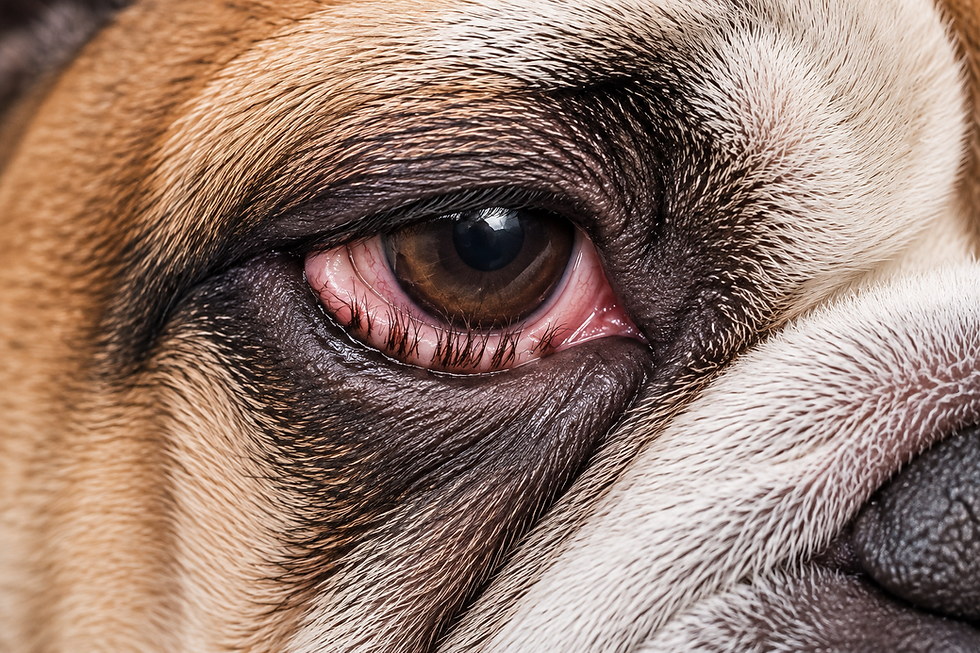
Entropion occurs when part of the eyelid rolls inward towards the eye.
This can cause eyelid hair or eyelashes to repeatedly rub against the surface of the eye.
That constant friction can cause irritation, watering, redness and pain and, in more serious cases, damage or ulceration of the cornea.
SIGNS TO WATCH FOR:
- • Squinting
• Excessive tearing
• Redness
• Rubbing or pawing at the eye
• Sensitivity to light
• Discharge
• Hair visibly rubbing against the eye
• Recurrent eye irritation
“HAIR SHOULD NOT BE RUBBING AGAINST THE SURFACE OF THE EYE.”
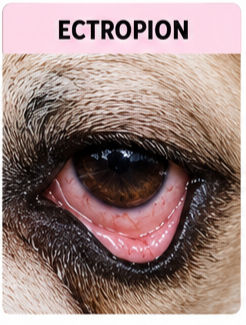
ECTROPION
THE EYELID ROLLS OUTWARDS

Ectropion occurs when the eyelid turns or hangs outward instead of sitting closely against the eye.
This can leave the inner eyelid and surface of the eye more exposed to air, dust, debris and irritation.
Some breeds naturally have looser eyelids, but excessive eyelid looseness that affects comfort or healthy eye function should not simply be dismissed as normal breed appearance.
SIGNS TO WATCH FOR:
- • Drooping or outward-turned lower eyelid
• Exposed pink tissue
• Redness or irritation
• Excessive tearing
• Discharge
• Recurrent conjunctival irritation
• Dry or irritated areas of the eye
“BREED TYPE SHOULD NEVER COME BEFORE COMFORT AND FUNCTION.”
ENTROPION = EYELID ROLLS IN • ECTROPION = EYELID ROLLS OUT
Eyelid shape is part of functional conformation. Breeders should consider whether the eyelids protect the eye properly and allow the dog to live comfortably — not simply whether the dog's head looks impressive.
Persistent squinting, pain, redness, discharge or suspected damage to the surface of the eye requires veterinary assessment.
DRY EYE & CORNEAL ULCERS
DRY EYE (KCS)

WHAT IS DRY EYE?
Dry eye is commonly known medically as Keratoconjunctivitis Sicca (KCS).
It occurs when the eye does not produce enough tears, or when the tear film is not adequate to keep the surface of the eye properly lubricated and protected.
Tears do much more than make an eye look wet. They help protect, nourish and lubricate the surface of the eye.
SIGNS TO WATCH FOR:
- • Red or irritated eyes
• Thick or sticky discharge
• Recurrent eye infections or inflammation
• Squinting
• Rubbing or pawing at the eye
• A dull or dry-looking eye surface
• Discomfort
• Changes to the appearance of the cornea
“TEARS ARE PART OF THE EYE'S NATURAL PROTECTION SYSTEM.”
HOW IS IT CHECKED?
A veterinary surgeon can measure tear production using tests such as the Schirmer Tear Test.
Dry eye can have different causes, so identifying the underlying problem matters rather than simply repeatedly cleaning away discharge.
WHEN THE SURFACE OF THE EYE NEEDS PROTECTION

WHAT IS A CORNEAL ULCER?
SIGNS TO WATCH FOR:
- • Sudden squinting or holding the eye closed
• Excessive tearing
• Redness
• Pawing or rubbing at the face
• Sensitivity to light
• Cloudiness or a visible change to the cornea
• Discharge
• Sudden obvious eye pain
“A PAINFUL OR SUDDENLY CLOSED EYE SHOULD NEVER BE IGNORED.”
HOW IS IT CHECKED?
Veterinary examination may include fluorescein staining, where a special dye highlights damage to the surface of the cornea.
The cornea is the clear outer surface at the front of the eye.
A corneal ulcer occurs when this surface becomes damaged.
Ulcers can develop following trauma, scratches, foreign material, eyelid or eyelash problems, reduced tear protection or other eye disease.
Bullbreeds with prominent eyes, facial folds or eyelid abnormalities may be particularly vulnerable to eye-surface injury.
CORNEAL ULCERS
EYES CAN DETERIORATE QUICKLY
Eye problems that appear minor can sometimes become serious rapidly.
Sudden pain, persistent squinting, cloudiness, injury, significant redness or a dog that will not open its eye should receive prompt veterinary attention.
GOOD EYE HEALTH IS NOT ABOUT PRODUCING A DOG WITH AN IMPRESSIVE-LOOKING HEAD.
IT IS ABOUT PRODUCING A DOG WHOSE EYES ARE PROTECTED, COMFORTABLE AND FUNCTIONAL.
TEAR STAINING & ALLERGIES

LOOK BEYOND THE STAIN
Not every tear stain means a dog has an eye disease. Tears naturally contain pigments that can leave reddish-brown staining, particularly on lighter fur.
However, suddenly increased staining, constant wetness, redness, soreness or discharge can indicate that something is irritating the eye.
WHY ARE THE EYES WATERING?
- Possible contributing factors can include:
• Eyelid or eyelash problems
• Allergies
• Pollen, grass, dust or environmental irritation
• Hair or facial folds contacting the eye
• Problems with normal tear drainage
• Eye inflammation, injury or infection
“DON’T JUST CLEAN THE STAIN — ASK WHY THE FACE IS CONSTANTLY WET.”
Food can be relevant where a genuine food allergy or sensitivity exists, but tear staining alone should not automatically be blamed on diet. Look at the whole dog and investigate persistent or sudden changes.
CLEAN THE FOLDS — THEN DRY THEM
Facial folds close to the eyes can collect tears, moisture, dirt and debris. Regular gentle cleaning helps keep the skin comfortable, but cleaning is only half the job.
After cleaning, the folds should be carefully dried. Leaving deep folds constantly damp can encourage irritation and skin problems.
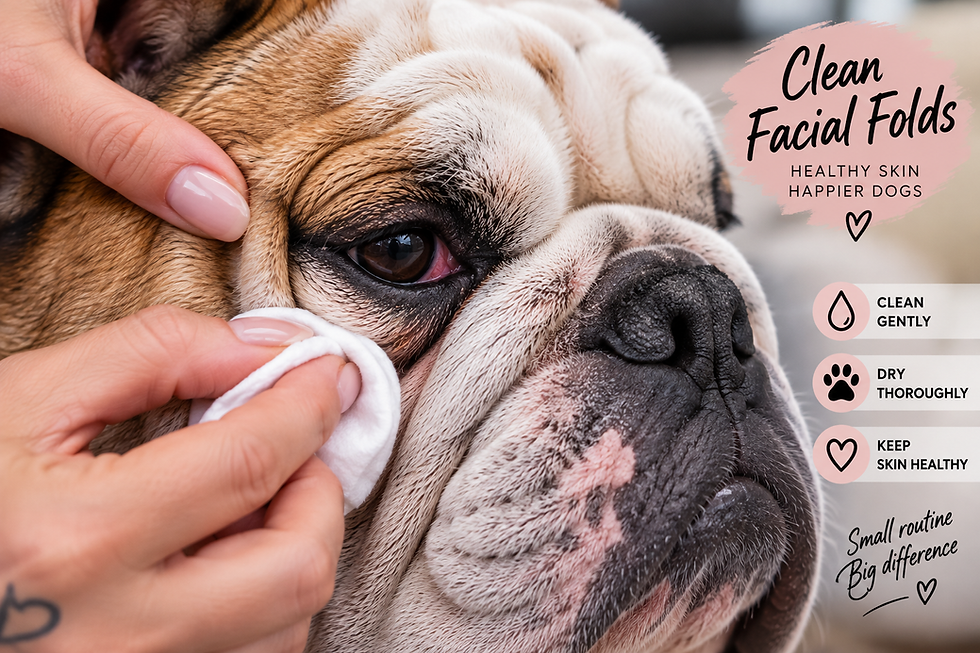
“CLEAN IS GOOD. CLEAN AND DRY IS BETTER.”
- • Clean gently — do not scrub
• Work away from the eye
• Use a clean area of the cloth or pad for each eye
• Carefully clean inside facial folds where needed
• Gently dry between the folds afterwards
• Never push wipes, products or fingers into the eye
• Avoid harsh or perfumed products close to the eyes
• Stop if the area appears painful or the dog becomes uncomfortable
Persistent soreness, broken skin, smell, discharge or inflammation around the folds should not simply be covered up with cleaning products — investigate the cause.
BOWLS, WATER & EVERYDAY HYGIENE
Good everyday hygiene matters when caring for the face and eyes.
Food and water bowls quickly collect saliva, food residue and debris, so they should be washed regularly rather than simply topped up or reused.

CHOOSE BOWLS THAT ARE EASY TO KEEP CLEAN
Stainless steel and suitable glazed ceramic bowls are generally easy to wash thoroughly.
Plastic bowls can become scratched over time, making them more difficult to clean effectively.
Whatever material is used, cleanliness matters more than simply changing the type of bowl.
- • Wash food bowls after use
• Clean water bowls regularly
• Replace drinking water with fresh water
• Check scratched or damaged bowls
• Keep the feeding area clean
• Wash hands before cleaning around the dog's eyes
“A NEW BOWL IS NOT A MAGIC CURE FOR TEAR STAINING — GOOD HYGIENE IS PART OF THE BIGGER PICTURE.”
Persistent tear staining, excessive watering or eye irritation should not automatically be blamed on bowls, water or diet. If the eyes themselves are showing signs of discomfort, look for the underlying cause.
EYE HEALTH & RESPONSIBLE BREEDING

LOOK BEYOND APPEARANCE
A dog can have clear-looking eyes and still carry or develop an eye condition.
Responsible breeding means looking beyond appearance and considering eye health as part of the whole dog.
“LOOKING HEALTHY IS NOT THE SAME AS BEING HEALTH TESTED.”
WHAT SHOULD BREEDERS CONSIDER?
- • The dog's own eye health
• Eyelid structure and function
• Recurrent eye irritation or treatment
• Eye problems seen in close relatives
• Conditions known to occur within the breed or bloodline
• Appropriate veterinary or recognised eye screening
• Health information that appears later in life
Health information should not stop being collected once a dog has been bred from. Problems that develop later may still provide valuable information about a bloodline.
“BREED THE WHOLE DOG — AND FOLLOW THE WHOLE LIFE.”
BBU encourages breeders to record genuine eye-health information honestly, including both good results and problems that develop later. Transparency gives future breeders and owners better information to make responsible decisions.